
Executive Summary
Problem Statement: Current ground systems and logistics networks rely on perimeter-based security that, once breached, allows adversaries to move laterally across the entire theater communication grid. In a tactical environment, this "flat" network architecture transforms a single compromised field node into a gateway for wide-scale espionage or the disruption of critical supply chains and command-and-control (C2) capabilities.
Cost of Inaction: A successful lateral breach in a theater grid results in more than just data loss; it leads to Mission Failure. The costs include the compromise of troop movements, loss of logistics integrity (supply chain sabotage), and potential loss of life. From a contractual perspective, failure to meet CMMC 2.0 standards risks the immediate revocation of authority to operate (ATO) for defense contractors supporting these systems.
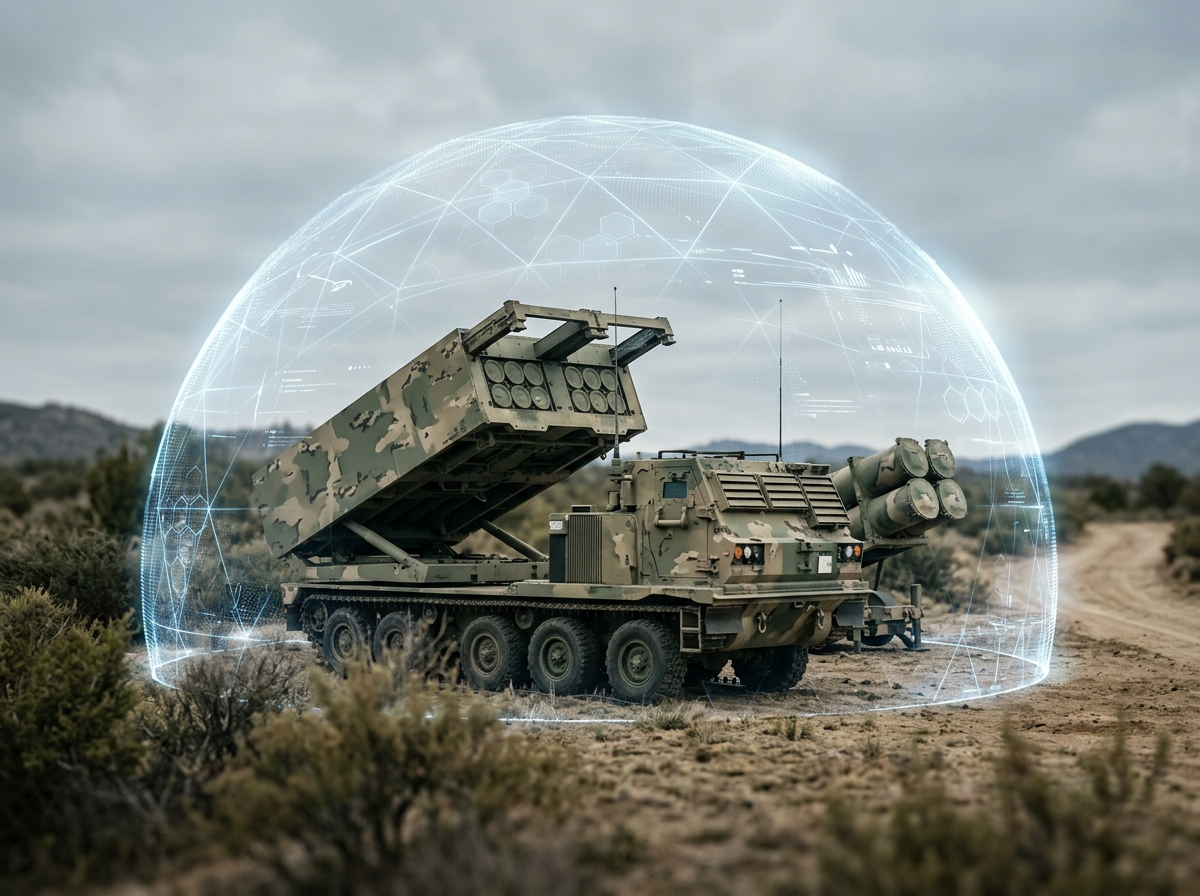
Proposed Solution: We propose a Cognitive Zero-Trust Architecture (ZTA). Unlike traditional security, this approach assumes the network is already compromised. It implements "Micro-Perimeters" at the tactical edge, ensuring that every request—whether from a logistics terminal or a field radio—is explicitly verified. By integrating a Cognitive Intelligence Layer, the system can automatically detect anomalous lateral movement patterns and isolate infected nodes in milliseconds without human intervention.
Expected Outcome: The transition from a "Trust-but-Verify" model to a "Never Trust, Always Verify" model, resulting in the total elimination of implicit trust within the theater grid and a drastic reduction in the blast radius of any single point of compromise.
Customer Engagement Process
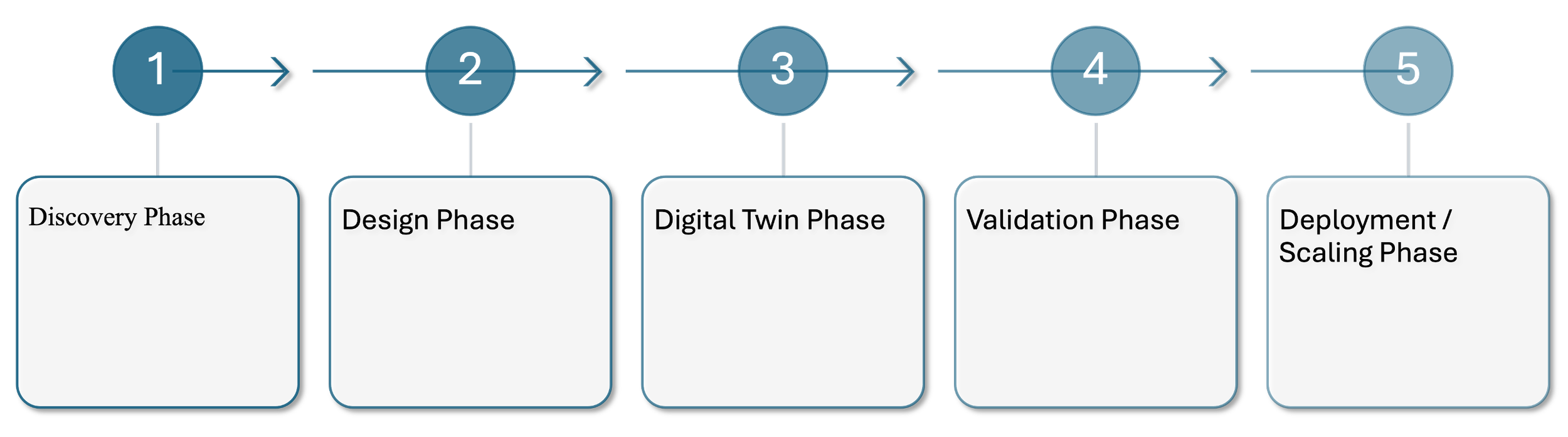
The engagement process for deploying a Zero-Trust Cognitive Enterprise (ZTCE) integrated with LLM-enabled knowledge management is a rigorous, five-stage lifecycle designed to eliminate implicit trust while maximizing operational intelligence.
Discovery Phase
To map the tactical environment, we will conduct targeted interviews and artifact collection:
Stakeholder Interviews:
Theater Command/CISO: Focus on mission-critical priorities and risk appetite for automated containment (e.g., "Is it acceptable to isolate a node if it risks temporary comms loss?").
Signal Corps/CTO: Technical deep dive into the current communication grid (SATCOM, LTE, Mesh) and existing routing protocols.
Logistics Program Manager: Mapping of logistics data flows—from warehouse management systems to field delivery nodes.
Compliance Officer: Review of CMMC 2.0 gaps and NIST SP 800-171 assessment results.
Artifacts to Collect: Tactical network topology maps, asset inventories (including IoT/IIoT logistics sensors), existing IAM configurations, and previous Red Team exercise reports focusing on lateral movement.
Design Phase
We will utilize a Maturity Gap Analysis based on the CISA ZTMM:
Current State: Likely "Traditional" (Perimeter-based, static passwords).
Future State: "Optimal" (Dynamic policies, AI-driven response, full visibility).
Mapping Method: Each pillar (Identity, Device, Network, App, Data) will be scored 1–4, with a specific migration path defined to move from Initial$\rightarrow$ Advanced $\rightarrow$ Optimal.
Validation/Pilot (Proof of Value)
A high-fidelity PoV will be executed in a simulated tactical environment.
Scenario: A "Compromised Logistics Terminal" attempt. An attacker gains access to one edge node and attempts to scan the theater grid for C2 servers.
Pass/Fail Criteria:
The Cognitive Engine must detect the reconnaissance pattern (lateral movement) within $<30$ seconds.
The Policy Decision Point (PDP) must automatically trigger a "Quarantine" policy to the local PEP, isolating the node.
Zero unauthorized packets must reach the target C2 server.
Deployment & Scaling
Phase 1: Shadow Mode. Deploy PDP/PEP in "Observation Mode." Policies are evaluated, and alerts are generated, but traffic is not blocked. This ensures no mission-critical comms are accidentally severed.
Phase 2: Selective Enforcement. Enable hard enforcement for high-risk logistics segments.
Phase 3: Full Theater Rollout. Global enforcement across all field communications.
Architectural Mapping
Logical Layers
Identity Layer: Transition from static credentials to Tactical Identity. Use of hardware-backed certificates (TPM) and multi-factor authentication (MFA) tailored for DIL (Disconnected, Intermittent, Limited) environments.
Network/Transport Layer: Implementation of a Software-Defined Perimeter (SDP). The network is "dark"; resources are invisible until the PDP authorizes a connection.
Data & Application Layer: Micro-segmentation of logistics apps. Data is encrypted at rest and in transit using AES-256, with access granted via short-lived tokens.
Cognitive/Intelligence Layer: The "Brain" of the system. A UEBA (User and Entity Behavior Analytics) engine that monitors telemetry to adjust trust scores in real-time.
Control Plane vs. Data Plane:
Control Plane: Houses the PDP (Policy Decision Point). Manages policy logic and identity verification.
Data Plane: Houses the PEPs (Policy Enforcement Points) embedded at the edge (e.g., in tactical routers or software agents on terminals).
Reference Diagram Specifications
Logical Architecture: A diagram showing a centralized PDP communicating via a secure channel to distributed PEPs located at the Tactical Edge, Logistics Hubs, and Command Centers.
Auth+Authz Sequence: (User $\rightarrow$ PEP $\rightarrow$ PDP [Verify Identity + Device Health + Context] $\rightarrow$ Trust Algorithm $\rightarrow$ Decision [Allow/Deny/Step-up] $\rightarrow$ PEP opens ephemeral tunnel to Resource).
Zone Map: A visualization of "Micro-Perimeters" where each logistics node is its own isolated zone, preventing any east-west traffic without PDP approval.
Representative Technology Stack
| Layer | Category | Example Vendor/Tool Type |
|---|---|---|
| Identity | IdP / Tactical IAM | ForgeRock, Okta (GovCloud), or Custom PKI/CAC |
| Device | UEM / Endpoint Health | CrowdStrike Falcon, Microsoft Intune (FedRAMP) |
| Network | SASE / SDP | Zscaler Private Access, Appgate, Cloudflare One |
| Cognitive | UEBA / AI Engine | Darktrace, Exabeam, or Custom ML Models |
| Operations | SIEM / SOAR | Splunk Phantom, Palo Alto Cortex XSOAR |
Governance & Compliance Framework
Regulatory Alignment
This design is mapped specifically to:
CMMC 2.0 Level 2 (Advanced): Ensuring the protection of Controlled Unclassified Information (CUI) across the logistics chain.
NIST SP 800-207: Adhering to the core tenets of Zero Trust (all communication is secured regardless of location).
NIST SP 800-171: Implementing the required security controls for non-federal systems processing CUI.
Policy Engine Logic: The Trust Algorithm
Access decisions are not binary but based on a dynamic Trust Score ($\mathcal{T}$):
T = (W_i IdentityConf) + (W_d DevicePosture) + (W_c Context) - (W_r * BehaviorRisk)
Variables:
Identity Confidence ($W_i$): MFA strength, certificate validity.
Device Posture ($W_d$): OS patch level, presence of EDR, TPM integrity check.
Context ($W_c$): Geo-location (is the node in the assigned theater?), Time-of-access.
Behavioral Risk Score ($W_r$): AI-detected anomalies (e.g., unusual API call volume).
Triggers:
T}> 80: Full Access.
50 < T < 80: Step-up Auth (Request second MFA factor).
T < 50$: Immediate Isolation/Deny.
Success Metrics & KPIs
| Metric | Baseline (Current) | Target (Future State) | Measurement Method |
|---|---|---|---|
| MTTD (Detection) | Hours/Days | < 5 Minutes | SIEM alerts for lateral movement |
| MTTR (Containment) | Manual intervention | < 30 Seconds | Time from alert to PEP isolation |
| Attack Surface | Flat Network (Open) | ≈ 95% Reduction | % of ports/services hidden via SDP |
| User Friction Index | High (VPN logins) | Low (Seamless SSO) | Avg. auth prompts per shift |
| Compliance Score | Gap identified | 100% CMMC L2 Alignment | Third-party C3PAO Audit |
Implementation Roadmap
Horizon 1: Foundation (0–3 Months)
Focus: Visibility and Identity.
Actions: Deploy Tactical IAM, establish asset inventory, implement "Shadow Mode" monitoring.
RACI: Vendor leads architecture; Client provides network access and identity data.
Horizon 2: Cognitive Integration (3–12 Months)
Focus: Micro-segmentation and AI Detection.
Actions: Deploy PEPs at the edge, integrate UEBA engine to analyze packet headers and API sequences, implement the Trust Algorithm.
RACI: Vendor configures ML models; Client validates "Mission-Critical" traffic patterns.
Horizon 3: Autonomous Resilience (12+ Months)
Focus: Full ZT Maturity.
Actions: Enable autonomous threat containment (auto-isolation), integrate with SOAR for theater-wide orchestration, continuous compliance auditing.
RACI: Client takes over primary Ops; Vendor provides L3 support and model tuning.
Rough Order of Magnitude (ROM) Investment Model
| Horizon | Licensing Costs | Professional Services | Staffing/FTE | Total Band |
|---|---|---|---|---|
| Horizon 1 | Medium (IdP/EDR) | Medium (Discovery/Design) | Low (Project Mgr) | Medium |
| Horizon 2 | High (SDP/AI Engine) | High (Implementation) | Medium (Security Eng) | High |
| Horizon 3 | Medium (Maintenance) | Low (Optimization) | Medium (SOC Ops) | Medium |
- Ingestion Volume: SIEM/UEBA costs scale with the volume of telemetry from field nodes.
- Edge Hardware: Potential need for hardware refreshes to support TPM 2.0 or PEP agents.
- Seat Licensing: Per-user MFA and SDP licensing.
Risks, Assumptions & Dependencies
Risks:
DIL Environments: High risk that intermittent connectivity may break the PDP $\rightarrow$ PEP heartbeat. Mitigation: Implement "Local Survivability Mode" where PEPs use cached policies.
Operational Friction: Field operators may bypass security if it slows down logistics. Mitigation: Focus on seamless, transparent authentication (Cert-based).
False Positives: AI may isolate a critical node during a high-stress event. Mitigation: Implement "Human-in-the-loop" override for designated Command roles.
Assumptions: Client has basic network telemetry available; hardware supports modern encryption standards.
Dependencies: Availability of theater-wide Signal Corps support for PEP deployment.
Appendix
Glossary
ZTA (Zero Trust Architecture): A security model based on the principle "never trust, always verify."
PDP (Policy Decision Point): The centralized engine that decides whether to grant access.
PEP (Policy Enforcement Point): The gatekeeper that executes the PDP's decision.
UEBA (User and Entity Behavior Analytics): AI that tracks "normal" behavior to detect anomalies.
SOAR (Security Orchestration, Automation, and Response): Tools that automate response actions.
DIL: Disconnected, Intermittent, and Limited bandwidth environments.
Reference Citations
NIST SP 800-207: Zero Trust Architecture.
CISA ZTMM 2.0: Zero Trust Maturity Model.
CMMC 2.0: Cybersecurity Maturity Model Certification.