
Executive Summary
Problem Statement
In the Oil & Gas sector, the traditional "air-gap" between corporate IT networks and Operational Technology (OT) has vanished. The convergence of these environments creates a critical vulnerability: an attacker gaining entry via a phishing email or compromised VPN can pivot into the Industrial Control Systems (ICS). Once inside, the ability to manipulate safety parameters—such as pressure valves or temperature thresholds—transforms a digital breach into a catastrophic physical event, risking loss of life, environmental disaster, and total facility loss.
Cost of Inaction
The risk is not merely financial or regulatory; it is existential. A single successful pivot to OT controls could result in:
Catastrophic Physical Failure: Potential for explosions, leaks, or refinery shutdowns.
Environmental & Legal Liability: Multi-billion dollar cleanup costs and criminal negligence charges.
Contractual Loss: Immediate loss of government energy contracts or joint venture partnerships due to failure to meet critical infrastructure security standards.
Proposed Solution
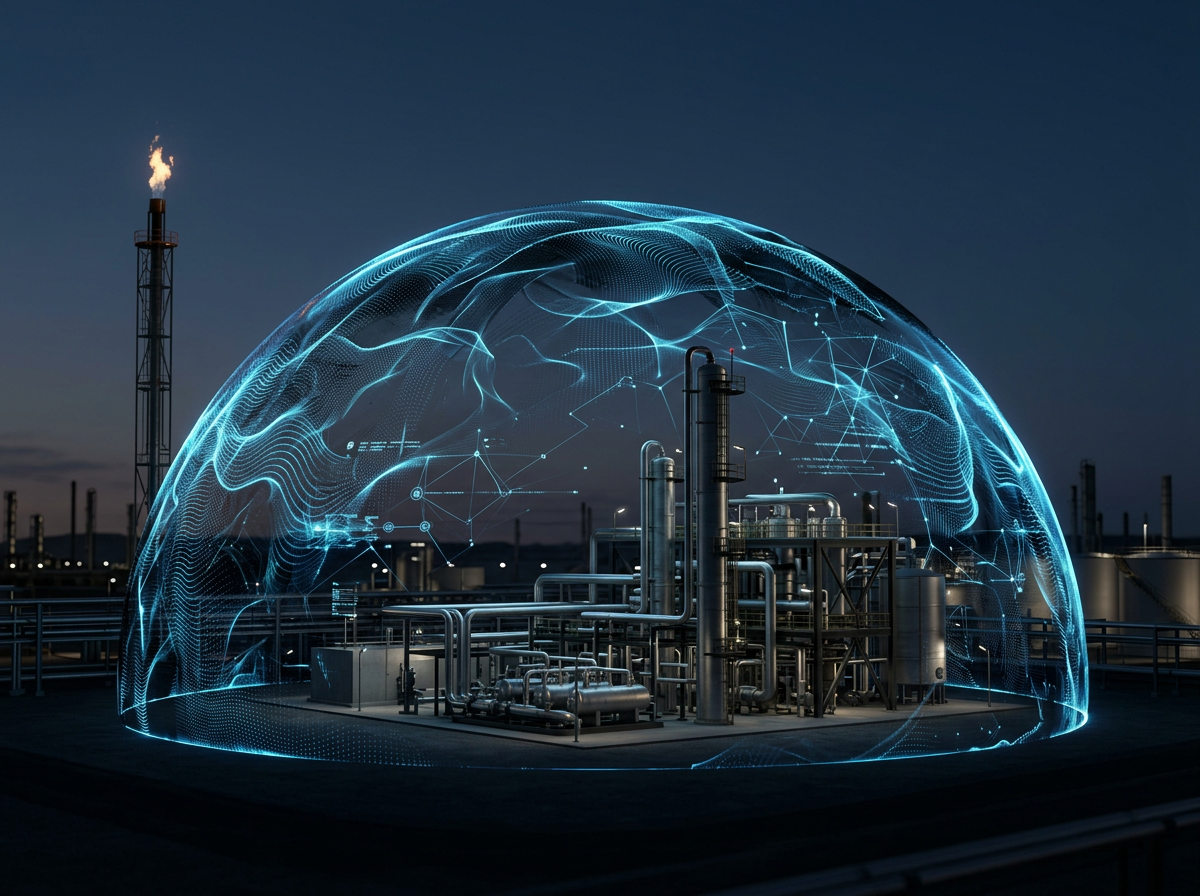
We propose a Zero-Trust Cognitive Enterprise (ZTCE) framework. Unlike traditional security that relies on perimeter firewalls, this approach assumes the network is already compromised. It isolates every high-hazard asset into its own "micro-perimeter" and employs an AI-driven cognitive layer that monitors industrial traffic in real-time. If a command is sent to a PLC (Programmable Logic Controller) that deviates from safe operational baselines or originates from an untrusted source, the system blocks the action autonomously before it can manifest physically.
Expected Outcome
The organization will transition from "reactive" security to "predictive" resilience, ensuring that even if IT credentials are stolen, the physical safety of the plant remains mathematically and logically isolated from the threat.
Customer Engagement Process
The engagement process for deploying a Zero-Trust Cognitive Enterprise (ZTCE) integrated with LLM-enabled knowledge management is a rigorous, five-stage lifecycle designed to eliminate implicit trust while maximizing operational intelligence.
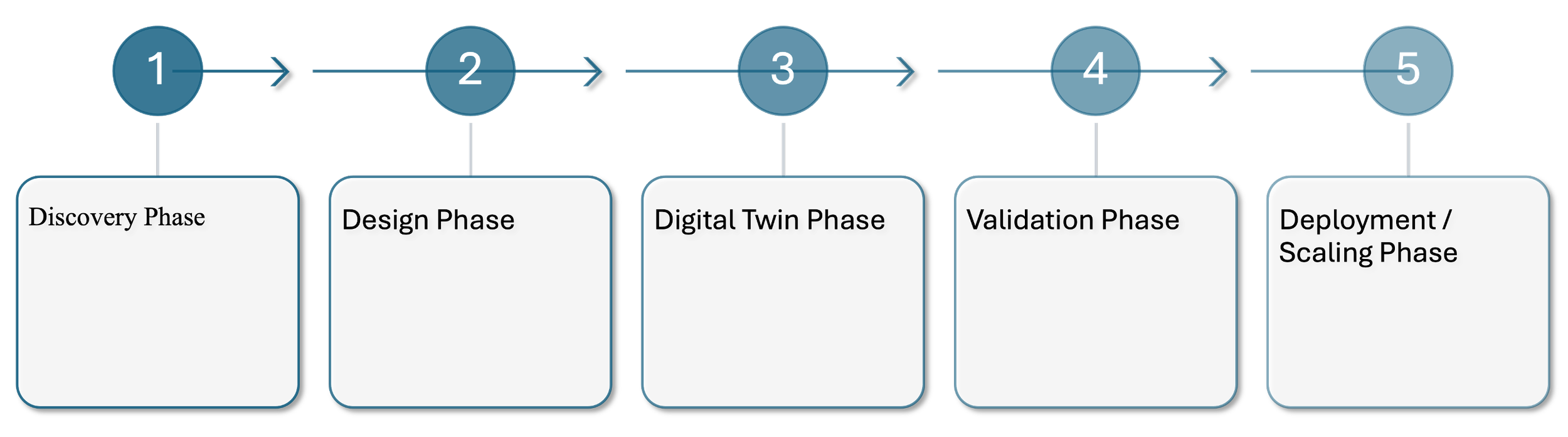
Discovery Phase
We will conduct a multi-disciplinary discovery process to map the intersection of digital identity and physical physics.
Stakeholder Interviews:
CISO/CTO: Focus on existing IT security gaps, visibility into OT, and risk appetite.
Plant Manager/OT Engineer: Identify "Crown Jewel" assets (e.g., SIS - Safety Instrumented Systems), critical set-points, and maintenance windows.
Compliance Officer: Review current adherence to TSA Pipeline Security Directives or NIST SP 800-82.
Program Manager (Gov Contracts): Define CMMC 2.0 Level 2 requirements for Controlled Unclassified Information (CUI) handling within the energy grid.
Artifacts to Collect:
Current Purdue Model network diagrams.
Asset inventory of PLCs, RTUs, and HMIs (including firmware versions).
Existing IAM roles and VPN access logs.
Recent audit findings from regulatory bodies.
Design Phase
We utilize a Maturity Gap Analysis based on the CISA ZTMM:
Traditional $\rightarrow$ Initial: Moving from static VLANs to identity-based access for engineers.
Initial $\rightarrow$ Advanced: Implementing dynamic policy enforcement and continuous monitoring of OT traffic.
Advanced $\rightarrow$ Optimal: Full cognitive automation where the AI can trigger "Safe State" shutdowns based on behavioral anomalies.
Validation/Pilot (Proof of Value)
A high-fidelity PoV will be conducted in a staging environment or a non-critical subsystem:
Scenario: An authorized engineer's workstation is compromised; the attacker attempts to change a pressure set-point beyond the "Safe Operating Envelope."
Pass Criteria:
The PDP (Policy Decision Point) detects an anomaly in the command sequence.
The AI engine flags the request as "High Risk" due to behavioral deviation.
The PEP (Policy Enforcement Point) blocks the packet in $<50\text{ms}$.
An alert is triggered in the SOC with full forensic telemetry.
Deployment & Scaling
Visibility Mode: Deploy sensors to baseline "normal" industrial traffic without blocking.
Shadow Mode: Policies are applied; blocks are logged but not executed (testing for false positives).
Hard Enforcement: Gradual rollout of active blocking, starting with the most critical Safety Instrumented Systems (SIS).
Architectural Mapping
Logical Layers
Identity Layer: Centralized IdP providing Phishing-resistant MFA for all users; Machine-to-Machine (M2M) identities for PLCs using certificates/SPIFFE.
Network/Transport Layer: Software-Defined Perimeter (SDP) replacing traditional VPNs. Micro-segmentation at the Level 1/2 (Cell/Area) boundary of the Purdue Model.
Data & Application Layer: API Gateways protecting HMI (Human Machine Interface) access; encryption of data-at-rest for historian databases.
Cognitive/Intelligence Layer: The "Brain" analyzing telemetry from both IT and OT to detect cross-domain pivots.
Control Plane vs. Data Plane: Separation of the Policy Decision Point (PDP - where the AI lives) from the Policy Enforcement Point (PEP - industrial firewalls/switches).
Reference Diagram Specifications
Logical Architecture: A diagram showing a centralized PDP interacting with distributed PEPs placed at every junction between IT $\rightarrow$ OT and between different OT zones.
Sequence Diagram:
Engineer $\rightarrow$ Request Change to PLC $\rightarrow$ PEP (Intercept) $\rightarrow$ PDP (Consult AI/Policy) $\rightarrow$ AI Engine (Check Telemetry vs Baseline) $\rightarrow$ Decision: Deny $\rightarrow$ PEP (Block).
Zone Map: A Purdue Model visualization showing the transition from Level 4 (Enterprise) to Level 0 (Physical Process), with ZT gateways at every layer boundary.
Representative Technology Stack
| Layer | Category | Example Vendor/Tool |
|---|---|---|
| Identity | IdP / MFA | Okta, Microsoft Entra ID, Duo |
| Device/Endpoint | UEM / EDR | CrowdStrike Falcon (OT-compatible), VMware Workspace ONE |
| Network | SASE / SDP / Micro-seg | Zscaler, Akamai Guardicore, Cisco TrustSec |
| Cognitive AI | Industrial IDS / UEBA | Nozomi Networks, Dragos, Darktrace OT |
| Control Plane | Policy Engine | HashiCorp Consul, OPA (Open Policy Agent) |
| Visibility | SIEM / SOAR | Splunk OT, Palo Alto Cortex XSOAR |
Governance & Compliance Framework
Regulatory Alignment
CMMC 2.0 Level 2: Required for defense-related energy contracts; focuses on protecting CUI through strict access control and auditing.
NIST SP 800-207: The foundational ZTA architecture guiding the "Never Trust, Always Verify" logic.
IEC 62443: The global standard for Industrial Automation and Control Systems (IACS) security, specifically focusing on "Zones and Conduits."
TSA Security Directives: Compliance with mandatory pipeline/rail cybersecurity requirements.
Policy Engine Logic (The Trust Algorithm)
Access decisions are not binary but calculated based on a weighted risk score:
Decision = (Identity Confidence 0.3) + (Device Posture 0.2) + (Network Context 0.2) + (Behavioral Risk Score * 0.3)
Variables:
Identity Confidence: MFA status + Role-Based Access Control (RBAC).
Device Posture: Patch level, presence of EDR, known MAC/Certificate.
Network Context: Source IP, Geolocation, Time-of-day vs. Shift Schedule.
Behavioral Risk Score (Cognitive): Analysis of the specific command being sent. Example: Is a "Write" command to a safety register occurring during a non-maintenance window?
Triggers:
Low Risk (<= 30): Grant Access.
Medium Risk (31 --70): Step-up authentication (Biometric MFA) + Manager Approval.
High Risk (> 70): Immediate Block + Isolation of the requesting asset.
Success Metrics & KPIs
| Metric | Baseline (Current State) | Target (Future State) | Measurement Method |
|---|---|---|---|
| MTTD (OT Breach) | Weeks/Months | < 15 Minutes | Red Team exercise / Simulation |
| Attack Surface | Open IT → OT routes | 0 Unmanaged paths | Network discovery scan / Graph analysis |
| Safety Violations | Undetected until physical | 100% Blocked/Alerted | AI Engine logs vs. PLC set-points |
| User Friction Index | Frequent VPN logins | Single Sign-On (SSO) flow | Help-desk ticket volume for "Access" |
| CMMC Readiness | ∼ 20–30% controls met | 100% Level 2 compliant | Third-party C3PAO assessment |
Implementation Roadmap
Horizon 1: Foundation & Visibility (0–3 Months)
Goal: Eliminate "blind spots" and secure the identity perimeter.
Actions: Deploy passive OT sensors for asset discovery; implement Phishing-resistant MFA for all IT/OT admin accounts; establish a centralized log repository.
RACI: Vendor (Lead Design), Client IT (Implementation), Plant Ops (Access Provisioning).
Horizon 2: Cognitive Integration & Segmentation (3–12 Months)
Goal: Break the kill chain between IT and OT.
Actions: Implement micro-segmentation via SDP; integrate AI/UEBA for industrial protocol analysis (DPI); deploy PDP/PEP at critical zone boundaries.
RACI: Vendor (AI Tuning), Client IT (Network Config), Plant Ops (Validation).
Horizon 3: Autonomous Resilience (12+ Months)
Goal: Self-healing infrastructure and full ZT maturity.
Actions: Enable autonomous blocking of high-risk commands; integrate SOAR playbooks for automated asset isolation; achieve CMMC Level 2 certification.
RACI: Client IT/OT (Ownership), Vendor (Optimization).
Rough Order of Magnitude (ROM) Investment Model
| Horizon | Cost Band | Primary Drivers | Staffing Requirement |
|---|---|---|---|
| Horizon 1 | Low-Medium | IdP Licensing, Sensor Hardware | 0.5 FTE Project Mgr, Vendor Architect |
| Horizon 2 | Medium-High | SDP Licenses, AI Engine Subscriptions | 1.0 FTE Network Eng, OT Specialist |
| Horizon 3 | Medium | Maintenance, Audit/Certification Fees | Managed Service Provider (MSP) / SOC |
Risks, Assumptions & Dependencies
Key Assumptions
The client has a reasonably accurate (though perhaps outdated) asset inventory.
Plant operations will allow "Passive Mode" monitoring without requiring full downtime.
Existing network hardware supports VLANs or is compatible with SDP overlays.
Top Delivery Risks & Mitigations
Risk: AI False Positives blocking critical safety commands $\rightarrow$ Mitigation: Extended "Shadow Mode" period and manual override "Break-Glass" protocols for plant operators.
Risk: Latency introduced by the PDP/PEP in time-sensitive OT loops $\rightarrow$ Mitigation: Deploy PEPs as close to the edge as possible; use hardware-accelerated inspection.
Risk: Resistance from OT staff ("Don't touch the PLC") $\rightarrow$ Mitigation: Early involvement of Plant Managers in the PoV and focus on "Safety" rather than "Security."
Appendix
Glossary
ZTA: Zero Trust Architecture.
PDP/PEP: Policy Decision Point / Policy Enforcement Point.
UEBA: User and Entity Behavior Analytics.
SOAR: Security Orchestration, Automation, and Response.
PLC/RTU: Programmable Logic Controller / Remote Terminal Unit.
DPI: Deep Packet Inspection (analyzing the actual payload of industrial protocols).
Reference Citations
NIST SP 800-207: Zero Trust Architecture.
CISA ZTMM 2.0: Zero Trust Maturity Model.
CMMC 2.0: Cybersecurity Maturity Model Certification.
IEC 62443: Security for Industrial Automation and Control Systems.