

Zero-Trust Cognitive Frameworks for Commercial Enterprises
Commercial enterprises are moving away from traditional perimeter-based security toward a zero-trust cognitive framework to mitigate risks in an increasingly decentralized digital economy. This shift moves the defensive line from the corporate firewall to the individual user, device, and data transaction across hybrid cloud environments. By enforcing continuous authentication at every access point, businesses can integrate AI-driven analytics into their core operations with certainty that the resulting insights are based on verified, untampered data. This fusion of zero trust and cognitive intelligence evolves the enterprise from a rigid set of IT assets into an adaptive ecosystem capable of automating complex business workflows and mitigating cyber threats in real-time.
To maintain this competitive edge, these capabilities are deployed via a containerized application stack. This replaces monolithic software installations with modular, isolated units that can be deployed and scaled independently across hybrid cloud environments. By utilizing this containerized approach, enterprises can rapidly expand their operational capabilities—such as deploying new AI-driven fraud detection modules or specialized analytics tools—without the need to reconfigure the entire underlying infrastructure. Because these services are decoupled, updates and security patches can be pushed to specific components in real-time, ensuring that the system evolves without risking systemic downtime. By pairing this deployment agility with a zero-trust posture, commercial organizations create a resilient foundation that scales dynamically to meet market demand while maintaining strict control over every workload.
Explore our Reference Designs
Political Campaign Infrastructure Use Case

A cyber attack on political campaign IT infrastructure can lead to the leak of sensitive strategic memos or the manipulation of voter databases. It could enable adversaries to spread misinformation or disrupt get-out-the-vote efforts. A Zero-Trust Cognitive Enterprise secures these operations by enforcing strict identity verification for all staff and consultants while using AI to detect anomalies in data access patterns and communication streams.
Mining/Exploration Infrastructure Use Case
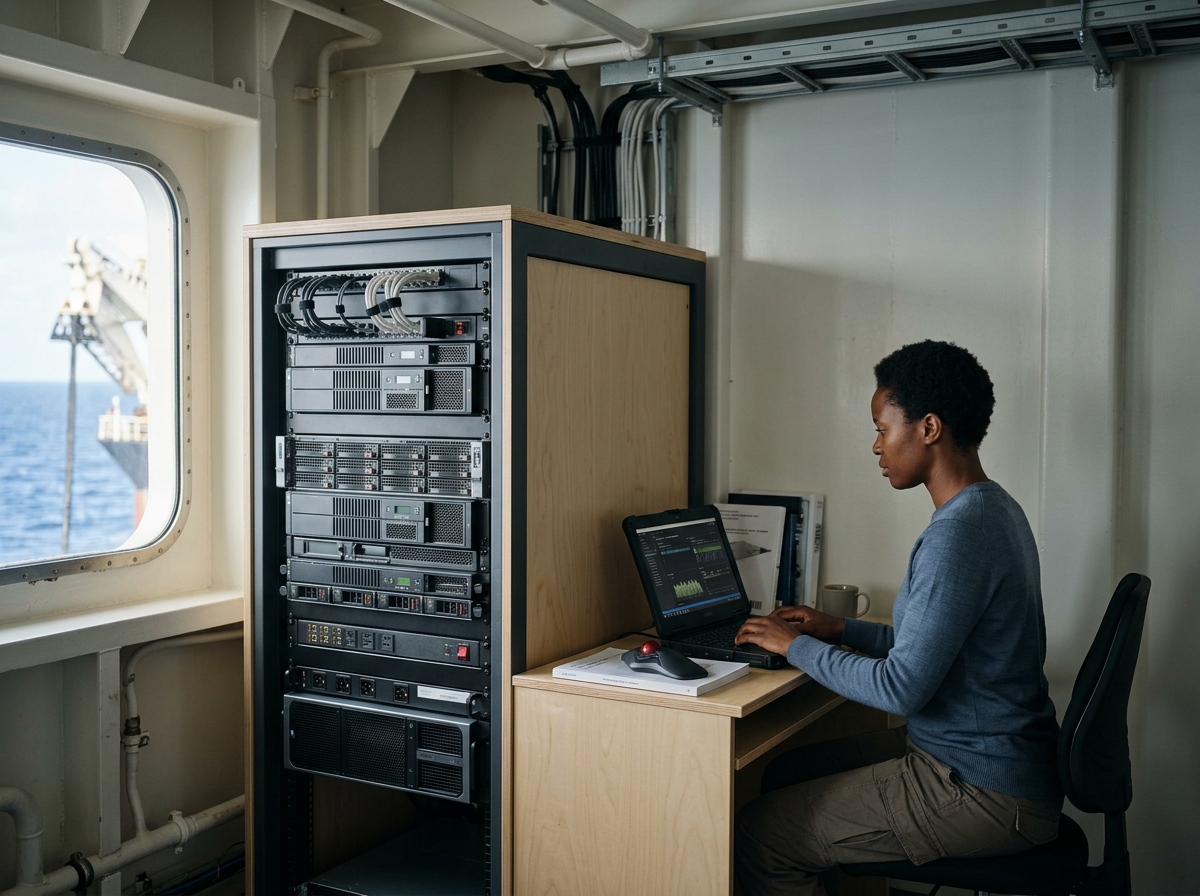
A cyber attack on deep sea mining exploration infrastructure can lead to the loss of search area situational awareness. It could enable adversaries to hijack autonomous vehicles or spoof mineral survey data to misdirect extraction efforts. A Zero-Trust Cognitive Enterprise secures these operations by implementing strict identity verification for all underwater telemetry streams and using AI to detect anomalies in geological data and robotic behavioral patterns.
Security Management Infrastructure Use Case

A cyber attack on high-value asset tracking or security monitoring systems can lead to a total loss of asset visibility. It could enable adversaries to spoof location data or disable alarms to cover the theft of critical items. A Zero-Trust Cognitive Enterprise secures these systems by implementing strict identity verification for all sensor tags and telemetry streams while using AI to detect anomalies in movement patterns and system inputs.
Integrating AI-enabled edge systems, zero-trust cognitive architectures, and digital twins increases the operational efficiency and security of commercial enterprise ecosystems. AI at the edge allows IoT devices and remote facilities to process data locally, reducing latency and the reliance on centralized cloud dependencies. To secure this distributed footprint, a zero-trust cognitive framework eliminates implicit trust, using continuous authentication and behavioral monitoring to ensure that if an endpoint is compromised, the threat is isolated before it can move laterally into the corporate backbone. Digital twins then leverage these secured data streams to maintain high-fidelity virtual replicas of physical assets and supply chain environments. These models enable executives to run real-time simulations, predict equipment failures, and test operational adjustments based on actual field telemetry rather than static assumptions. By combining these three elements, organizations ensure that the data fueling their business intelligence is verified and that their decentralized infrastructure remains resilient against intrusion.
Automated Farming Infrastructure Use Case

A cyber attack on hyper-automated hydroponics and vertical farming infrastructure can lead to catastrophic crop failure or the theft of proprietary growth formulas and processes. Adversaries to manipulate nutrient and lighting schedules to sabotage yields. A Zero-Trust Cognitive Enterprise secures these facilities by implementing strict identity verification for all IoT sensors and actuators while using AI to detect anomalies in environmental telemetry.